How Does a Parcel Locker Work – And What Does It Have to Do With Smart Lockers?
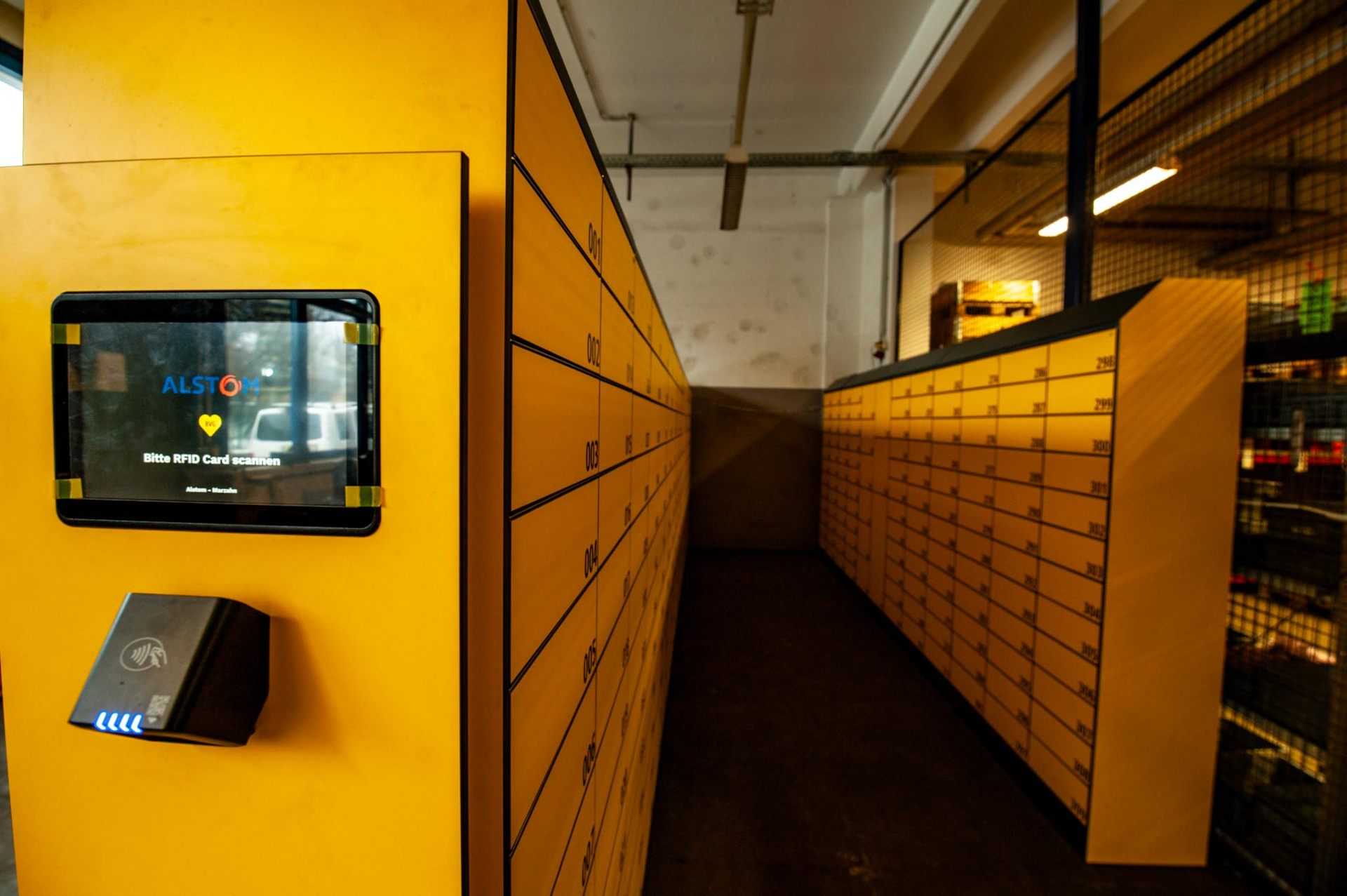
What Is a Parcel Locker?
You probably know them from DHL: The parcel locker stands at supermarkets, gas stations, or in residential areas and allows you to pick up or send parcels around the clock – without queuing and independent of post offices.
The principle is simple: A machine with individual compartments that are electronically controlled. Each compartment can be individually opened and closed – controlled via an app or access code.
How Does the Pickup Process Work?
The typical parcel locker pickup process looks like this:
- Notification: You receive a push notification or email that your parcel has been deposited.
- Authentication: At the machine, you identify yourself via app, QR code, or pickup code (mTAN).
- Compartment Opens: The system recognizes your authorization and automatically opens the correct compartment.
- Pickup & Completion: You take out your parcel, the compartment closes and is ready for the next use.
No key, no staff, no opening hours. The entire process runs fully automatically.
From Parcel Locker to Smart Locker
What many don't know: The technology behind a parcel locker – the combination of electronic hardware, cloud software, and digital access methods – is exactly what is now summarized under the term "smart locker." The key difference: Smart lockers are used for much more than just parcels.
Parcel Locker
- • Primarily for parcel delivery
- • At fixed locations (public)
- • Operated by logistics providers
- • Standardized compartment sizes
- • One use case: parcels
Smart Locker
- • For any items & handovers
- • Flexibly deployable (indoor & outdoor)
- • Operated by the respective company
- • Modular, customizable compartment config
- • Countless use cases
With the HEIUKI vending machine, TIKI SHARE offers exactly this flexibility: A modular system that adapts to your use case – not the other way around.
Use Cases for Businesses
The technology behind the parcel locker opens up entirely new possibilities for businesses – far beyond mere parcel delivery. Whether as a Click & Collect solution in retail or as an internal distribution system:
Click & Collect in Retail
Customers order online and pick up goods contactlessly at the machine – even outside opening hours.
Internal IT Distribution
Laptops, headsets, or access cards are provided via lockers – without on-site IT helpdesk.
Tool & Material Lending
Tools or PPE are distributed and returned via machines – fully documented.
Municipal Handovers
Keys, documents, or equipment are handed over securely and traceably via lockers.
Conclusion
The parcel locker was the beginning – but smart lockers are the evolution. The same core technology used millions of times for parcels can now be applied to almost any form of physical handover: from IT distribution to tool lending to contactless goods pickup.
Anyone who understands how a parcel locker works also understands the potential of smart lockers – and can strategically use this technology for their own business.