RFID vs. QR Code – Which Access Method Suits You?
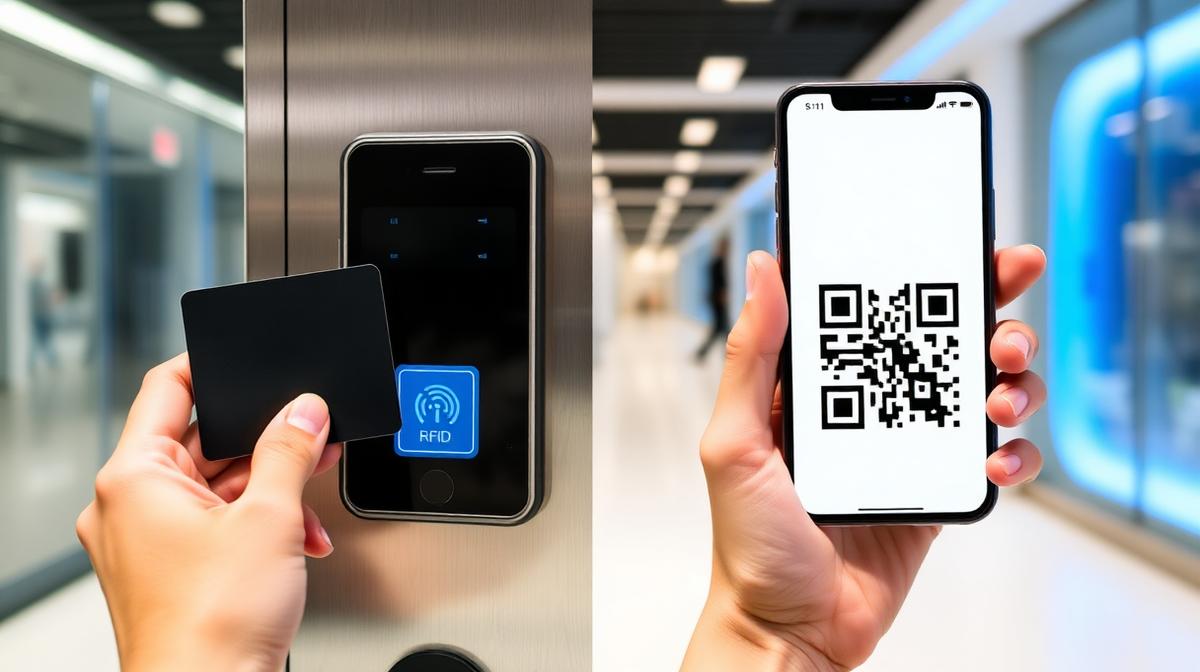
When looking into digital access systems, you quickly encounter various technologies: RFID, NFC, QR code, smartphone app. But which method is right? In this article, we focus on the two most relevant options in practice: RFID and QR code.
What Is RFID?
RFID technology (Radio-Frequency Identification) enables contactless identification via radio waves. In access control, RFID is typically used via cards, wristbands, or chips.
RFID Briefly Explained
You hold a card or wristband to a reader – that's it. Identification happens in milliseconds, without internet connection. The medium is issued once and can be used permanently. Ideal for fixed user groups like employees or gym members.
What Is QR Code Access?
With QR code access, the user receives an individual QR code – via email, SMS, or app. This is scanned at the reader or terminal and grants access. The special thing: no physical medium is needed.
QR Code Briefly Explained
A QR code is created and sent digitally – the recipient shows it on their smartphone. The code can be time-limited, single-use, or tied to specific areas. Perfect for guests, delivery drivers, or changing users who shouldn't receive a physical badge.
RFID vs. QR Code Compared
Both methods have their strengths – the right choice depends on the use case:
| Criterion | RFID | QR-Code |
|---|---|---|
| Medium | Physical (card, wristband, chip) | Digital (smartphone, email) |
| Distribution | On-site – medium must be handed over | Remote – code is sent digitally |
| Cost per User | Low (card ~€1–3) | None – purely digital |
| Offline Capability | Yes – works without internet | Limited – often requires internet |
| Speed | Very fast – just hold up | Fast – open app, scan |
| Security | High – card hard to copy | High – code can be time-limited |
| Flexibility | Tied to physical medium | Maximum flexibility – changeable anytime |
Which Method for Which Use Case?
The decision depends less on the technology than on the user profile:
RFID
- Gyms with regular members
- Companies with permanent employees
- Sports facilities and pools
- Tool distribution in production
QR-Code
- Coworking spaces with changing users
- Hotels and vacation rentals (guests)
- Parcel handover to delivery drivers
- Temporary access for visitors
Our Recommendation
Go for a system that supports both methods. This way, you can give regular users an RFID card while sending guests a QR code – all via one platform. Our modern access control makes exactly that possible.
How RFID and QR codes work together with hardware and software is explained in our article on the smart locker.
Conclusion
RFID and QR code are not competitors – they complement each other. RFID is the first choice when it comes to speed, offline capability, and fixed user groups. QR code scores with flexibility, remote distribution, and temporary access.
The best solution is a system that combines both methods on one platform – so you're prepared for every use case.
Want to know which access technology best fits your building or project?
Discover our flexible solutions.