Digital Locking System – What It Can Do and When It Pays Off
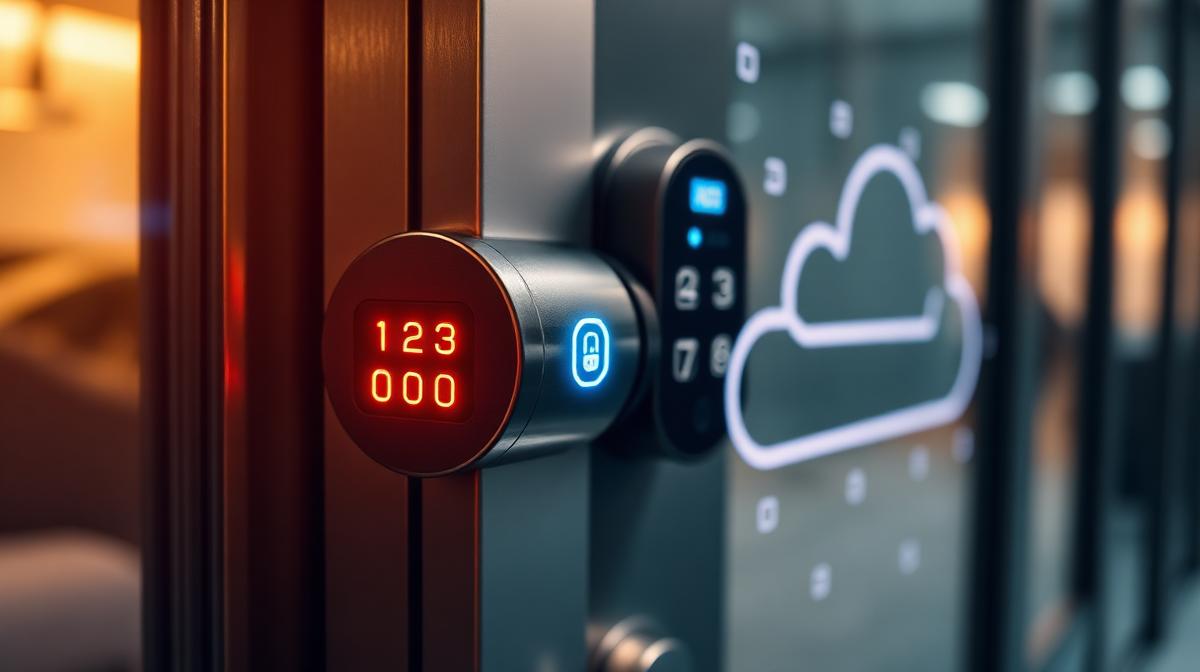
Mechanical keys, lock cylinders, master keys – anyone who has managed a locking system knows the effort involved. A digital locking system promises to drastically reduce this effort. But what's really behind it – and is the switch worth it?
What Is a Digital Locking System?
📖 Definition
A digital locking system replaces mechanical keys with electronic access media (RFID cards, smartphones, QR codes, or PINs). The locks are connected to cloud software through which access rights can be granted, changed, and revoked centrally – in real-time, from anywhere.
At its core, a digital locking system consists of two components:
- Electronic locks – on doors, cabinets, gates, or turnstiles. They replace the mechanical lock cylinder and communicate with the cloud.
- Cloud software – the central management tool. Here you define who can open which door and when.
The Difference from Classic RFID Locks
Many companies already use RFID systems. But RFID is not all the same. The crucial difference is whether the system works offline or online.
| Offline RFID | Online / Cloud | |
|---|---|---|
| Rights management | Physically at the lock | Centrally via dashboard |
| Changes effective | After manual update | Instantly in real-time |
| Blocking on loss | Each lock individually | One click – all locks |
| Remote opening | Not possible | Yes, via app or dashboard |
| Logging | Locally at the lock | Centrally in the cloud |
| Staff effort | High (on-site required) | Minimal (remote control) |
| Scalability | Complex | Easily expandable |
⚠️ The Core Problem with Offline RFID
With classic offline RFID systems, every single lock must be physically programmed. This means: for every authorization change – new employee, lost card, changed access times – someone must go to each affected lock on-site and manually program the change. With 10 doors, it's annoying. With 100 doors, it's a full-time job.
Why Online-Capable Hardware Is Crucial
An online-capable digital locking system is permanently connected to the cloud. This enables:
- Real-time access management: New employee? Access enabled in seconds – without being on-site.
- Instant blocking: Card lost or employee departed? One click blocks access at all doors simultaneously.
- Remote opening: You can open doors via app or dashboard – e.g., for delivery drivers or tradespeople.
- Complete logging: Every access is centrally documented – for security and compliance.
- Automation: Access rights can be time-limited and linked to bookings, contracts, or working hours.
Use Cases
Retrofitting or modernizing a locking system is especially worthwhile where many doors and changing users need to be managed:
- Offices & businesses: Employee access, meeting rooms, server rooms – all through one system.
- Co-working spaces: Flexible access for changing tenants – time-limited, automatically extended or blocked by contract.
- Municipalities & public buildings: Schools, sports halls, administration buildings – keys for clubs and events are assigned digitally.
- Residential buildings & rentals: Tenants, tradespeople, and cleaning staff receive temporary access – traceable and centrally managed.
Learn more about our access control solutions.
Conclusion
A digital locking system with cloud connectivity isn't an upgrade – it's a paradigm shift. Instead of managing keys, you manage rights. Instead of programming on-site, you control everything centrally and in real-time.
If you're still programming offline RFID locks individually today, switching to an online-capable system is the biggest lever you have for efficiency and security.
Want to modernize your locking system?
Let's talk about your project – and how an online-capable system simplifies your daily operations.